The first snowfall arrived early in southern Ontario this year—quiet, heavy, wet, and unexpected. It came as poppies began to appear on coats and wreaths on cenotaphs. Maybe it’s fitting. Remembrance Day often brings its own kind of stillness. A time when memory presses closer.
 I
I
As a psychotherapist, I notice how this day lands differently for people. For some, it’s gratitude. For others, it’s confusion, sadness, even anger. Collective remembrance can stir up what’s been buried—grief that isn’t just about soldiers or history, but about families torn apart, stories silenced, and the violence we still live with in quieter ways.
Remembering – and What We Don’t
Every November, we’re told to remember. But what exactly do we remember, and what gets left out? The official stories often speak of sacrifice and freedom, but not of what came after — the silence, the fear, the grief, the ways trauma seeped into kitchens, classrooms, and DNA.
In my own family, the silences were thick. My great-uncle disappeared in 1945, leaving behind a wife and baby in a small Muskoka town. My grandmother never mentioned them, though they lived just down the road. I only learned about them later when his great granddaughter found me on social media. We shared the grief in knowing we grew up streets apart and could have been close.
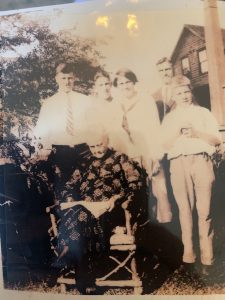
On another side of the family, entire villages in Eastern Europe were wiped out. My great-grandmother’s children escaped to North America, carrying survivor guilt and worry like invisible luggage. My husband’s family escaped under great stress from North Africa, bringing anger and mistrust with them. From England and Ireland came the quieter losses—poverty, displacement, and the kind of stoicism that can harden into distance.
No one called it trauma then. They just got on with it. But the body doesn’t always move on.
The Body Keeps the Story
Research into intergenerational trauma confirms what many families already sense: the nervous system remembers what the mind tries to forget. Patterns of vigilance, anxiety, and self-blame can echo through generations. People arrive in therapy describing a heaviness or depression they can’t explain, a sense of restlessness or sadness that seems out of proportion to their own lives.
Sometimes that weight belongs partly to those who came before – to stories never told, grief never named, emotions that had nowhere to go. Sometimes they know the history intellectually or through stories shared or anxieties expressed, but did not live it or really understand it. Therapy often becomes a space to bring those stories into the light, to give them shape and language so they stop living as tension in the body or silence in relationships.
Beyond Two Minutes of Silence
Remembrance Day is meant to honour loss, but it also invites us to notice the ongoing human cost of conflict — the wars still happening, the state-sponsored violence still rationalized, the divisions running through families and communities today.
True remembrance isn’t about romanticizing the past. It’s about facing it. It’s about asking how the culture of war — the normalization of violence, control, and domination — still plays out in our homes, workplaces, and politics. It’s about recognizing that grief doesn’t end when the guns go quiet.
Healing Through Remembering
Therapy can’t rewrite history, but it can help us stop carrying it unconsciously. It can help our bodies and relationships remember something else: safety, compassion, truth. When we allow ourselves to feel what was once too painful to feel, we begin to loosen trauma’s grip across generations.
If this early snowfall or this Remembrance Day brings something stirring to the surface—sadness, confusion, or just a sense of being unsettled—you’re not alone. Remembering can be hard, but it’s also where healing begins.
If you’re carrying stories that were never spoken or emotions that don’t seem entirely your own, therapy can help you make sense of them—one layer, one memory, one generation at a time.
I offer trauma-informed therapy and grief therapy. I offer in person sessions in the greater Hamilton area and online therapy across Ontario.
if this resonates, reach out for a consultation at ontariotherapist.com. What
#RemembranceDay #TraumaTherapy #GriefTherapy #IntergenerationalTrauma #CanadianTherapist #SomaticTherapy #TraumaHealing #BodyMindConnection #PsychotherapyOntario #CortneyPasternak #WarAndMemory #FamilySystems #AncestralHealing #TherapyForGrief